
An intelligent trash rack cleaner that detects faults first
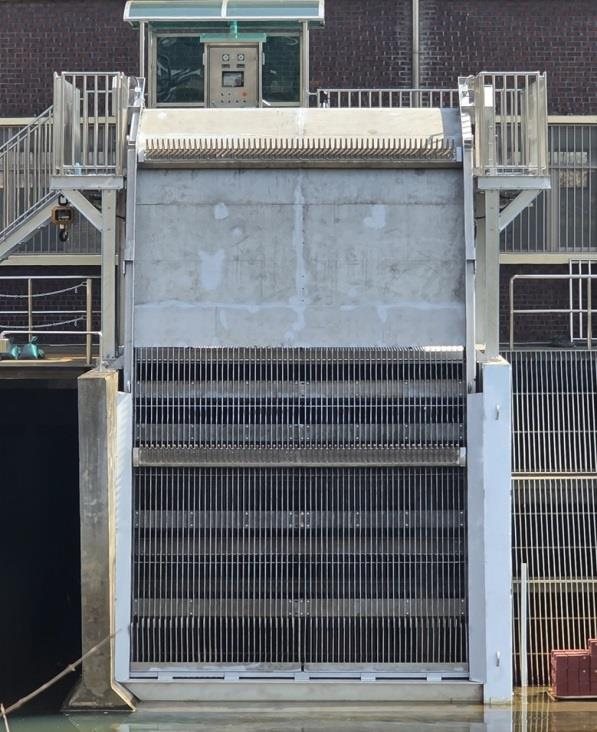
A rotary trash rack cleaner that detects debris overload and rake and drive shaft deformation in real time, and adjusts its own operation to prevent failures in advance.
- Performance Sharing success product
- Passed accredited laboratory testing
- Eligible for negotiated contracts
Why an intelligent trash rack cleaner
Trash rack cleaner failures are concentrated in periods of heavy rain. If repairs wait until after a failure, the pump station stops just when water needs to be drained.
Failures by month
60% of all failures occurred in the four months from May to August, around the rainy season.
Failure type
- Structural deformation · damage24%
- Reducer problems18%
- Noise · vibration17%
- Shear pin breakage16%
- Chain problems15%
- Other10%
Most failures begin with debris overload. Catching the overload first reduces the failures that follow.
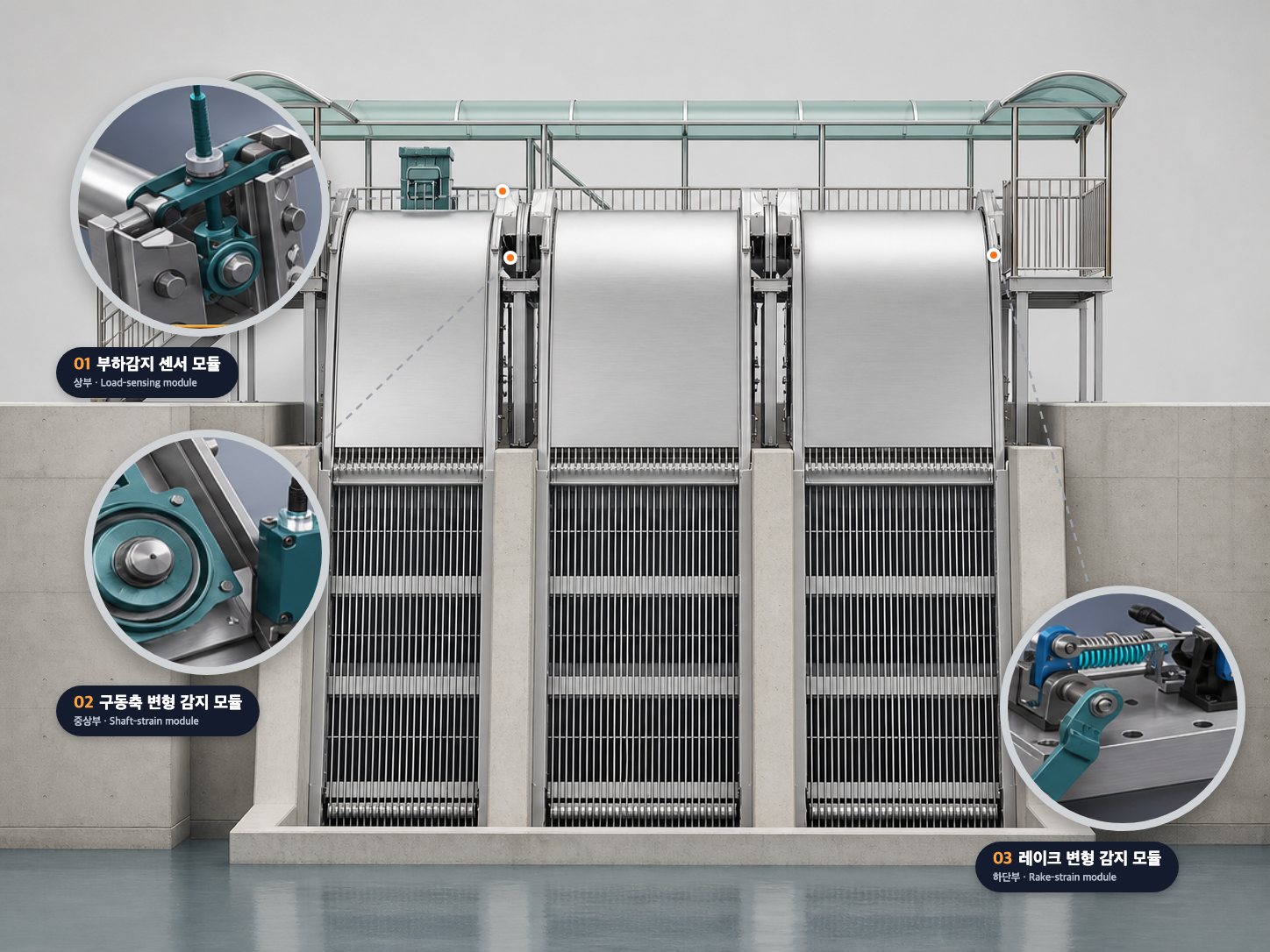
Senses three points and makes its own decisions
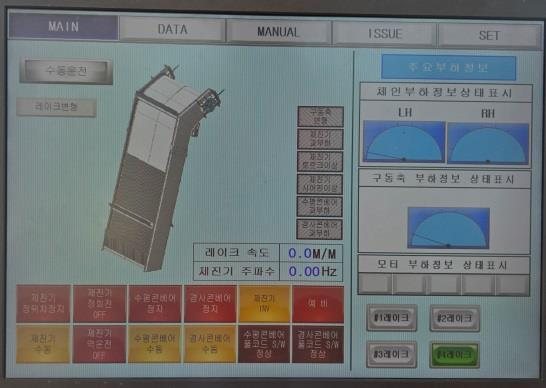
Three sensor modules continuously monitor the condition of the trash rack cleaner, and the intelligent operation management system switches to the operating mode suited to conditions.
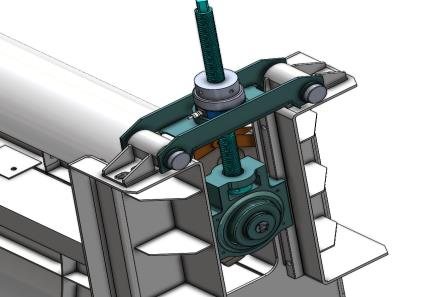
Load sensing module
Measures the load on the rake in real time. When an overload occurs, it lowers the speed to reduce the load.
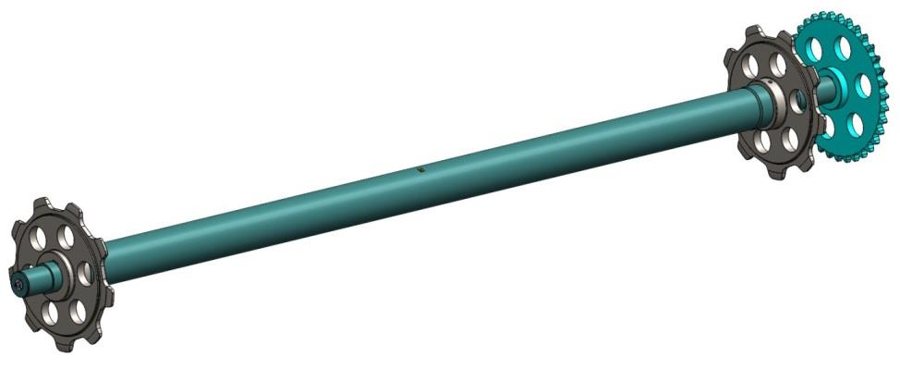
Drive shaft deformation sensing module
Detects torsion and bending of the drive shaft and gives notice before excessive force is applied to the reducer and chain.
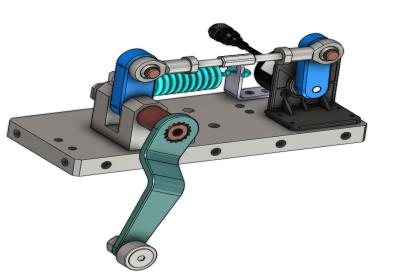
Rake deformation sensing module
Identifies each rake and detects bending or twisting, raising an alarm before it develops into a major failure.
- DetectMeasures load, drive shaft and rake condition
- DecideReal-time analysis by the intelligent operation management system
- Switch operationAutomatic control in the operating mode suited to conditions
- InformDisplays operating status and alarms to the operator
Operating modes that change with conditions
Faster when debris is light, slower when it is heavy. When an overload is detected, it lowers the speed step by step to protect the machine.
| Operating modes | Speed · Criteria | Notes |
|---|---|---|
| Raised standby (energy saving) | 3.0 m/min | Power consumption 0.8 kW or less |
| Light-load operation | 6.5 m/min | When debris is light |
| Constant-speed operation | 5.0 ~ 6.0 m/min | 2 stages |
| Overload operation | 2.0 m/min | Low speed under heavy load |
| Overload-reduction operation | When 200% is detected | Automatic reduction |
Verified by accredited laboratory testing
In accredited testing by the Korea Testing Certification Institute (KTC), it was judged to detect and operate normally in all three test items.
| Test items | Test conditions | Result |
|---|---|---|
| Load-sensing operation | Automatic operating mode switching according to load | Normal |
| Overload-reduction operation | Detects overloads of 200% or more and switches to overload-reduction operation | Normal |
| Sensing functions | Detects load fluctuation and rake deformation | Normal |
What changes after installation
Preventing failures in advance reduces both maintenance cost and time.
Lower maintenance costs
Prevents frequent failures, reducing repair costs.
Shorter maintenance periods
Resolves problems before they become failures, shortening the time needed to return to normal operation.
Power savings
Efficient operation reduces annual power consumption from 2,664kWh → 1,998kWh
Total cost reduction over 15 years
Based on life-cycle cost, combining manufacturing and maintenance costs
※ These are estimated values based on the results of the Performance Sharing project (2025). Actual results may vary depending on site conditions.
Let's review your drainage pump station equipment together
Tell us your site conditions and the equipment you need, and our engineer will recommend suitable specifications and provide a quote.